ACF
Asian Cinema Fund
Co-Production Support Fund
2026 Co-Production Support Fund
LIST Grateful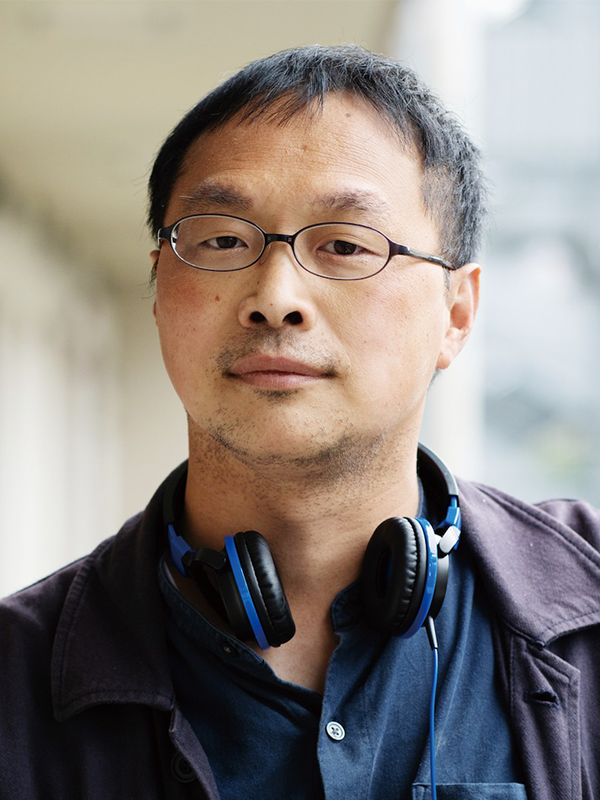
| Project | Grateful |
|---|---|
| Director | FUKADA Koji |
| Country/Region | Korea / Japan |
| Producer | SONG Dae-chan KAMEDA Yuko |
| Production Company | STUDIO TAKE g Co. Ltd. |
- Director’s Profile
- Born in Tokyo in 1980, Fukada Koji joined Hirata Oriza’s Seinendan Theatre Company as a director in 2005. He gained international recognition with Hospitalité (2010), Au revoir l’été (2013), and Sayonara (2015). Harmonium (2016) received the Un Certain Regard - Jury Prize at Cannes Film Festival 2016. In 2018, he was appointed a Chevalier of France’s Order of Arts and Letters. Love Life (2022) was selected for competition at Venice International Film Festival 2022. Love on Trial (2025) premiered internationally at Cannes Film Festival 2025, while Nagi Notes (2026) was selected for competition at Cannes Film Festival 2026. He also received the Akira Kurosawa Award at Tokyo International Film Festival 2022.
- Synopsis
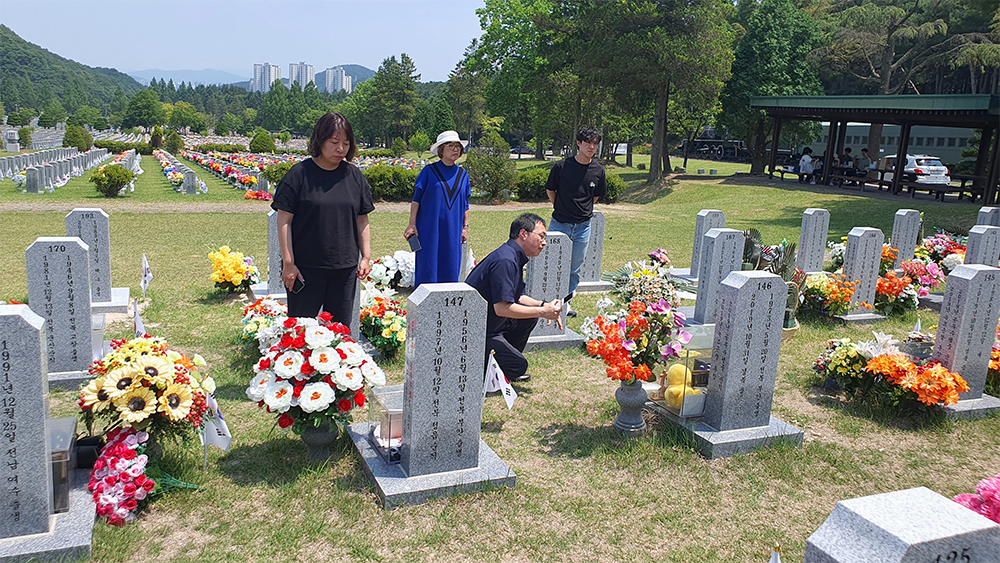
- As a teenager, Bora grows up isolated from the world with her deaf parents, communicating with them through sign language. Hyunwoo, a runaway boy, becomes her only escape. When Bora repeatedly says that she wants to leave home, Hyunwoo sets fire to her apartment, convinced that he is setting her free. Her parents survive, but Junho, a firefighter sent to rescue them, loses his life. Seven years later, Junho’s widow, Sujin, attends a healing camp for the families of fallen firefighters. There she meets Bora, now working as a sign language interpreter. Sujin gradually confides in her, revealing the grief and anger she has suppressed for years. Bora stays by her side, unable to confess that she is connected to the fire and burdened by guilt. On the final day of the camp, Sujin learns that the arsonist has been arrested and discovers that he is Hyunwoo, Bora’s former boyfriend. Feeling betrayed, she pushes Bora away. Days later, Bora asks Sujin to accompany her to Hyunwoo’s trial. Their decision to walk into the courtroom together does not offer complete forgiveness or restore what was lost. Yet it becomes an unfinished reconciliation and a first step toward facing their wounds and returning to life.
- Director’s Note / Intention
- One day, producer Song Dae-chan, who had seen Love Life (2022), sent me an article about a firefighter accident. It conveyed the profound grief of a bereaved family who had lost a loved one in a fire, as well as the difficulty of sharing that grief with others. As I read the article, I began to feel that I wanted to revisit the motif I had sought to explore in Love Life (2022). Before us lie countless divisions: between the living and the dead, generations, genders, nationalities, wealth and poverty, and people with and without disabilities. Yet regardless of such differences, every human being is like a solitary island, trapped in a lonely body. Rather than acting optimistically as if those divisions did not exist, this film seeks to portray people who, even while trembling before them, still reach toward the other side. I dream of the moment when an imaginary bridge connecting one island to another appears on the screen.
- Still